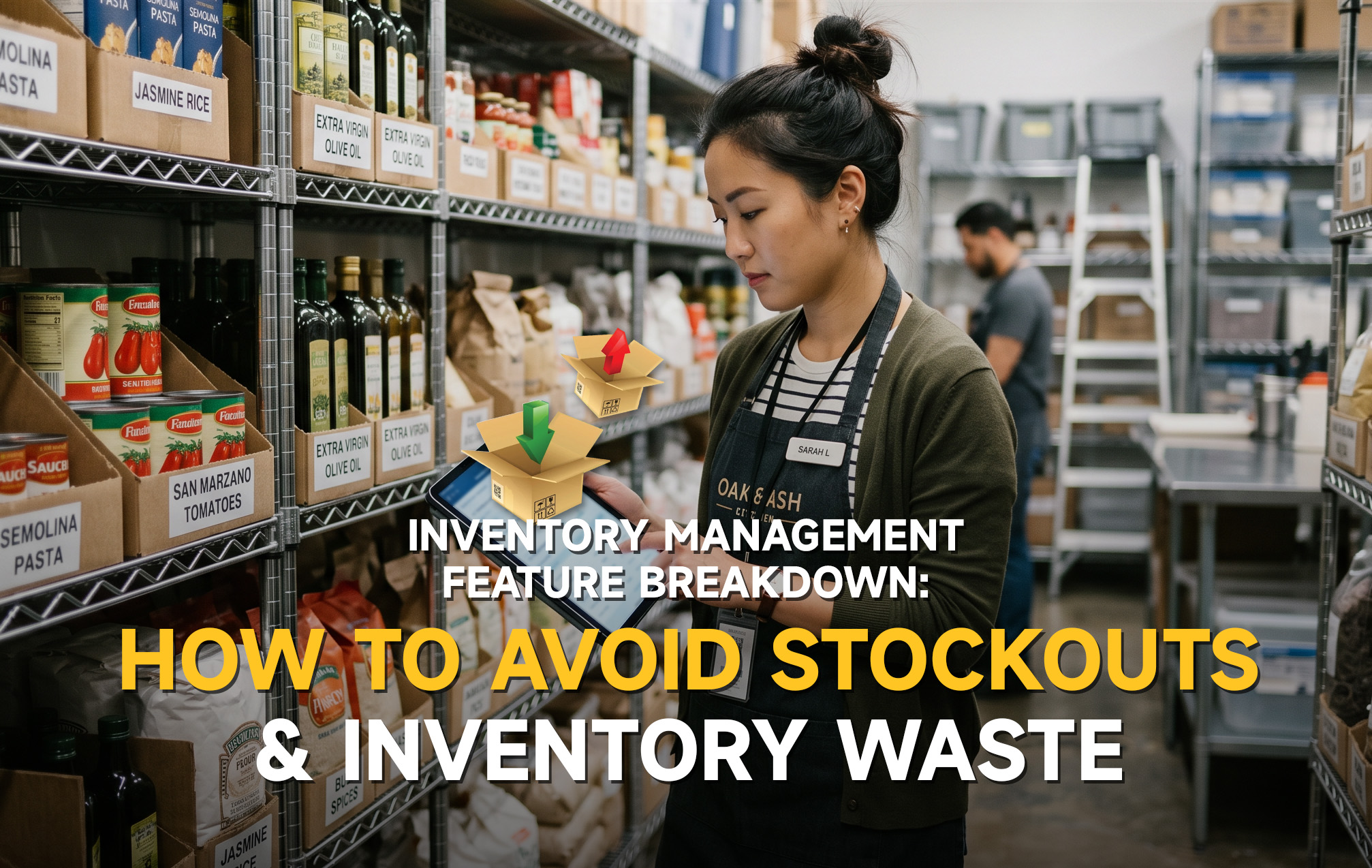
In the F&B and retail industries, inventory management is often underestimated, yet it directly impacts profitability and operational efficiency. Stockouts lead to lost sales and dissatisfied customers, while excess inventory ties up capital, increases spoilage, and results in waste. Finding the balance between “never running out” and “not overstocking” is a key challenge every merchant must solve.
With the advancement of digital tools, modern POS systems (such as MPOS) are no longer just for billing—they have become essential systems for enabling refined and intelligent inventory management.
- Core Challenges in Inventory Management
In daily operations, merchants commonly face the following pain points:
1️⃣ Stockouts
- Best-selling items run out
- Insufficient raw materials prevent order fulfillment 👉 Directly affects revenue and customer experience
2️⃣ Overstocking
- Slow-moving products
- Expired raw materials 👉 Leads to capital lock-up and increased waste
3️⃣ Inaccurate Data
- Errors from manual recording
- Mismatch between system and actual inventory 👉 Results in poor purchasing decisions
At their core, these issues stem from a lack of real-time data and systematic management.
- How Inventory Management Features Solve These Problems
1️⃣ Real-Time Inventory Synchronization: From Delayed Tracking to Real-Time Control
Modern MPOS systems enable:
- Automatic stock deduction with every sale
- Data synchronization across multiple devices (POS terminal, backend, mobile)
👉 Inventory data remains consistent across all devices
Benefits:
- Avoid situations where “the system shows stock, but none is actually available”
- Identify low inventory early
2️⃣ Low-Stock Alerts: Prevent Stockouts in Advance
The system allows you to set:
- Minimum stock levels
When inventory falls below the threshold:
👉 Automatic restocking alerts are triggered
Example:
- A beverage shop sets a minimum of 10 bottles of milk
- When stock drops to 9, the system alerts staff
Benefits:
- Enables timely purchasing
- Prevents lost sales due to stockouts
3️⃣ Smart Purchasing Recommendations: Reduce Human Error
Based on historical sales data, the system can:
- Analyze product sales trends
- Recommend optimal purchase quantities
👉 Eliminates reliance on guesswork
Benefits:
- Avoid over-purchasing
- Improve inventory turnover
4️⃣ Multi-Warehouse & Categorization: More Refined Management
MPOS inventory systems support:
- Multi-warehouse management (central warehouse / store-level stock)
- Product categorization (raw materials / finished goods / semi-finished goods)
👉 Provides clear visibility into inventory across locations
Benefits:
- Optimize stock transfers
- Avoid duplicate purchasing
5️⃣ Stocktaking (Inventory Counting): Ensure Data Accuracy
The system supports:
- Scheduled stocktaking (full or partial)
- Automatic discrepancy reports
👉 Quickly identify inventory differences
Benefits:
- Reduce human error
- Prevent losses and internal issues
6️⃣ Expiry & Batch Management: Reduce Waste
Especially critical for the F&B industry:
The system can track:
- Product batches
- Production and expiration dates
👉 Supports FIFO (First-In, First-Out) management
Benefits:
- Prioritize near-expiry items
- Minimize spoilage and waste
- How to Avoid “Stockouts + Waste” Through Inventory Management
✔ Key to Avoiding Stockouts
- Set low-stock alerts
- Monitor inventory in real time
- Replenish based on data
✔ Key to Avoiding Waste
- Control purchasing quantities
- Optimize inventory turnover
- Manage expiration dates
👉 Core principle: Make decisions based on data, not guesswork
- Business Value of Inventory Management
For Merchants:
- Improve inventory turnover
- Reduce capital tied up in stock
- Minimize losses and waste
- Increase operational efficiency
For Customers:
- More consistent product availability
- Fewer stockout situations
- Better overall experience
- Conclusion
The essence of inventory management is not just about “managing stock,” but about managing profit.
With MPOS inventory management features, merchants can achieve: 👉 Inventory visualization + data-driven insights + automated management
Ultimately reaching an ideal state:
- No stockouts (no missed sales opportunities)
- No overstocking (no wasted capital or resources)
In an increasingly competitive market, this level of refined operational capability is key to sustainable business growth.
Leave a Reply