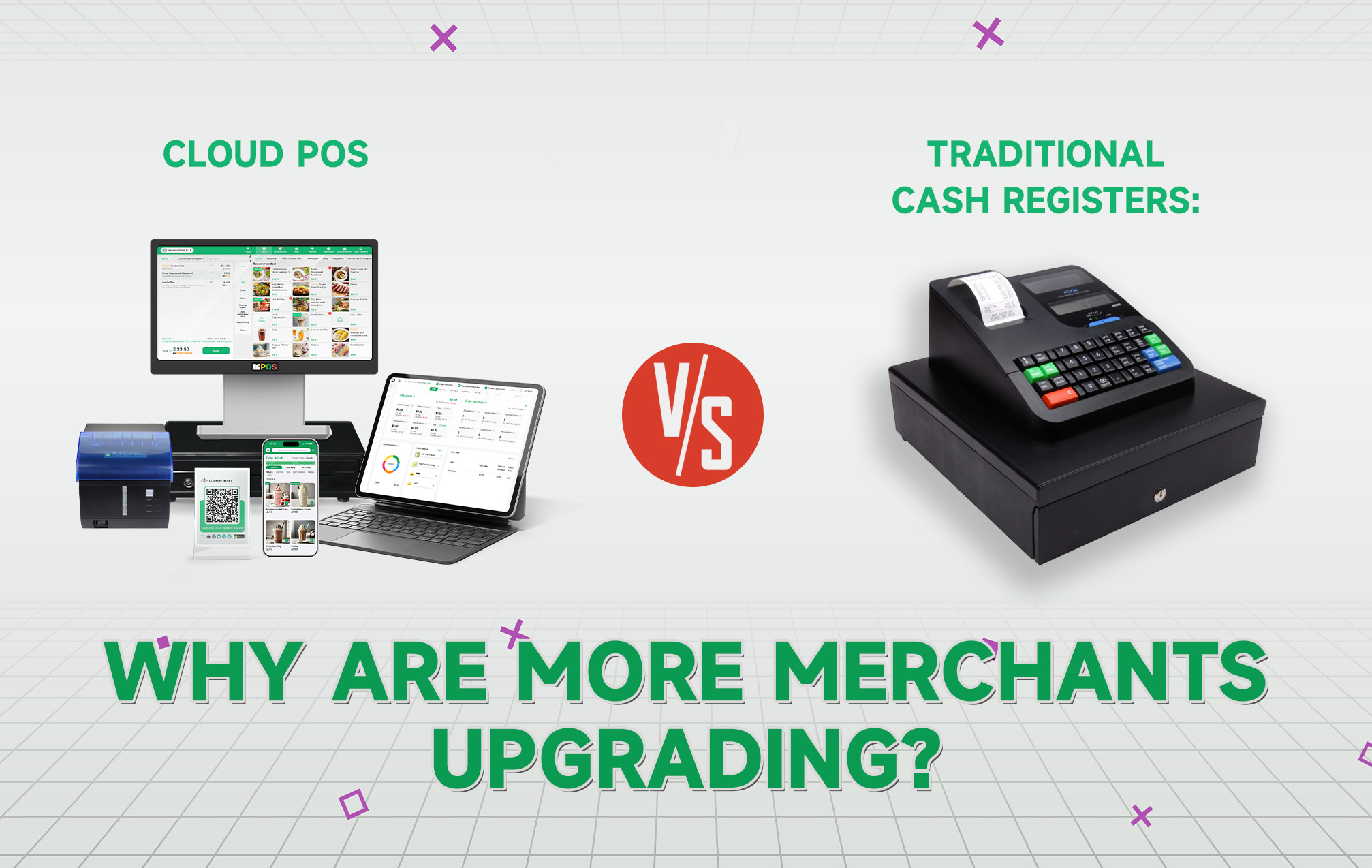
As the F&B and retail industries continue to digitize, more and more merchants are shifting from traditional cash registers to cloud-based POS systems. This is not just a technological upgrade, but a transformation in how businesses operate. So what exactly are the differences between the two? And why is Cloud POS becoming the mainstream choice?
- What is a Traditional Cash Register? What is a Cloud POS?
Traditional Cash Register
Traditional cash registers are mainly used for basic payment collection and simple record-keeping. Their key characteristics include:
- Operate locally (data stored within the device)
- Limited functionality (billing and receipt printing)
- No real-time data synchronization
👉 More like a “tool” rather than a management system
Cloud POS System
A Cloud POS is an internet-based intelligent management system that offers:
- Cloud-based data storage
- Real-time synchronization across multiple devices
- Integrated functions including billing, inventory, reporting, and membership management
👉 Not just a payment tool, but a business management platform
- Core Comparison: Cloud POS vs Traditional Cash Register
1️⃣ Data Management
Traditional Cash Register:
- Data stored locally
- High risk of data loss (e.g., device damage)
- No remote access
Cloud POS:
- Data automatically uploaded to the cloud
- Accessible anytime, anywhere (mobile / computer)
- Automatic backup with higher security
👉 Result: From “data silos” to “real-time visibility”
2️⃣ Functionality
Traditional Cash Register:
- Supports only billing and printing
- Little to no inventory management
Cloud POS:
- Billing + inventory + reporting + staff management + membership system
- Expandable (delivery, online orders, marketing tools)
👉 Result: From single-function to integrated management
3️⃣ Multi-Store Management
Traditional Cash Register:
- Each store operates independently
- Data cannot be consolidated
Cloud POS:
- Unified backend for multiple stores
- Real-time monitoring of all store data
👉 Result: More efficient and transparent chain management
4️⃣ Real-Time Data & Decision-Making
Traditional Cash Register:
- Requires manual export or calculation
- Data is delayed
Cloud POS:
- Generates real-time:
- Sales reports
- Best-selling product analysis
- Revenue trends
👉 Result: Data-driven decisions instead of guesswork
5️⃣ Operational Efficiency
Traditional Cash Register:
- More manual processes
- Higher risk of errors
Cloud POS:
- Automated workflows (orders, inventory, reconciliation)
- Reduced human error
👉 Result: Higher efficiency and lower labor costs
- Why Are More Merchants Choosing Cloud POS?
1️⃣ Adapting to Multiple Payment Methods (Especially in Cambodia)
Today’s market includes various payment methods:
- Cash (USD / KHR)
- Bank transfers
- QR payments (e.g., ABA / KHQR)
Cloud POS systems can unify all payment methods into one system, avoiding operational complexity.
2️⃣ Supporting Mobile Operations
- Payments can be processed via mobile phones or tablets
- Supports tableside ordering and delivery management
👉 Especially suitable for restaurants, cafés, and other high-frequency businesses
3️⃣ Driving Growth with Data
With cloud-based data, merchants can:
- Analyze customer behavior
- Optimize product offerings
- Develop targeted marketing strategies
👉 Upgrade from “running a business” to “managing a business”
4️⃣ Reducing Long-Term Costs
Although Cloud POS may involve subscription fees, in the long run it:
- Reduces labor costs
- Minimizes losses from errors
- Improves operational efficiency
👉 Ultimately saves more money
5️⃣ Easier Expansion and Upgrades
Cloud systems support:
- Continuous feature updates
- Quick integration of new payment methods or functionalities
👉 No need for frequent hardware replacements
- Who Should Upgrade to Cloud POS?
Cloud POS is especially recommended for:
- Restaurants/cafés (high transaction volume)
- Retail stores (complex inventory)
- Chain businesses (need centralized management)
- Growing businesses planning expansion
- Conclusion
Traditional cash registers solve the problem of “collecting payments,” while Cloud POS solves the problem of “how to run a more profitable business.”
In an increasingly competitive market, merchants need more than just tools—they need: 👉 Data, efficiency, and management capabilities
The rise of Cloud POS is a reflection of the broader digital transformation in business.
If the past relied on experience, the future of growth will depend on systems and data.
Leave a Reply