When setting up your business in Cambodia, one of the most common debates is whether to invest in an all-in-one professional hardware terminal or simply run POS software on a personal tablet or laptop. Each path has distinct financial implications.
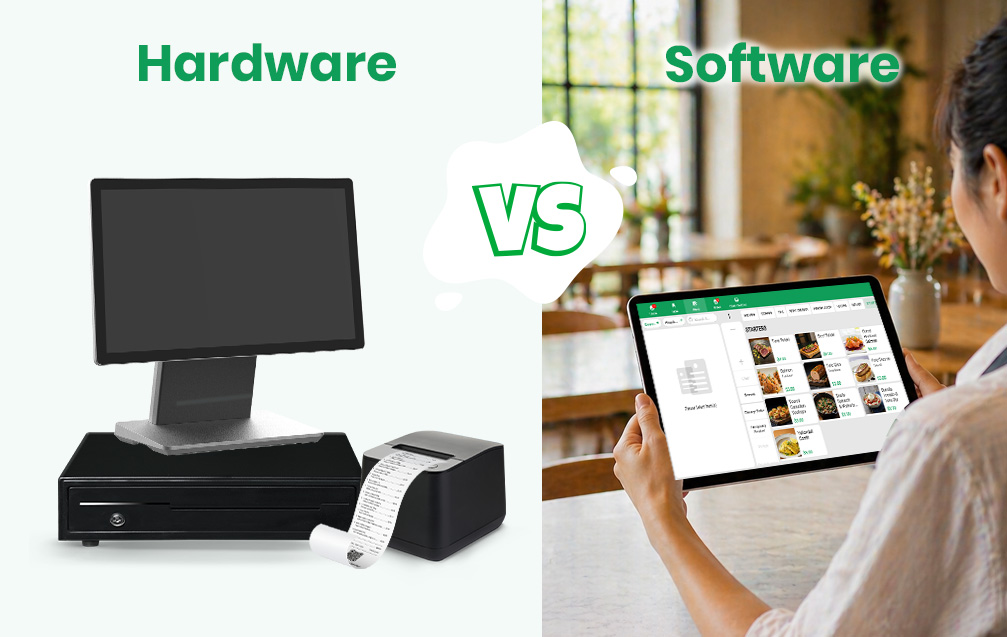
1. The “Software-Only” Approach (The Lean Startup)
If you are running a small pop-up shop or a boutique with under 100 transactions per day, using your own hardware can save you significant upfront costs.
- The Math: You avoid the initial $400–$1,000 investment in a dedicated terminal.
- The Reality: While the entry cost is low, you must manage individual cables for your cash drawer and printer. Consumer tablets aren’t designed for 12-hour shifts and can overheat or experience battery degradation, potentially leading to replacement costs within 12–18 months.
2. Professional Hardware (The Long-Term Investment)
For high-volume restaurants or retail stores, professional hardware like the M-POS MC1A is built for the “always-on” business environment.
- The Math: Higher upfront cost (often starting around $400–$500 for basic terminals in the Cambodian market).
- The Value: These devices feature splash-resistant casings, industrial-grade processors, and integrated receipt printers. This eliminates “cable clutter” and significantly reduces the Total Cost of Ownership (TCO) by lasting 3–5 years even in humid or dusty environments.
If you are just testing a concept, Software-Only is a great way to conserve cash. However, if you are processing over 100 transactions daily, Professional Hardware is the smarter budget choice. It prevents the costly downtime of a “frozen” consumer tablet during a busy lunch rush—a single afternoon of lost sales can often exceed the cost of the hardware itself.
Ready to compare options? Explore M-POS hardware and software packages today.
Leave a Reply